
When you’re going through mental health treatment for depression, food probably isn’t the first thing on your mind. But what you eat each day may play a more meaningful role in how you feel than many people realize. Research has increasingly pointed to a connection between dietary patterns and depressive symptoms, suggesting that nutrition deserves a place in the broader conversation about mental health care. This article explores what the science says about depression and diet, which foods may support your wellbeing, and how to think about eating as one part, not the whole, of your mental treatment plan.
Core Highlights
- Research suggests that certain dietary patterns, particularly the Mediterranean diet, are associated with lower rates of major depressive disorder.
- Foods rich in omega-3 fatty acids, leafy greens, whole grains, and fermented dairy may support brain function and mood regulation.
- Processed foods and refined grains have been associated with higher rates of depressive symptoms in several studies.
- Nutrition is not a replacement for professional mental health treatment, but it can be a meaningful complement to therapy and medication.
- Small, sustainable dietary changes tend to be more effective than dramatic overhauls, especially during periods of low energy and motivation.
The Research Behind Depression and Diet Choices

The idea that what you eat affects how you feel is not new, but the scientific evidence supporting links between diet and depression has grown considerably in recent years.
A widely cited randomized controlled trial known as the SMILES study found that adults with major depression who followed a Mediterranean-style diet experienced greater reductions in depressive symptoms compared to a control group receiving social support alone.
The American Psychiatric Association has acknowledged that lifestyle factors, including diet, are worth discussing as part of comprehensive mental health care, though nutrition is understood as a supportive element rather than a standalone treatment.
What Dietary Patterns Show Up in the Research
- Mediterranean diet: High in olive oil, leafy greens, fatty fish, whole grains, legumes, and vegetables, associated with a lower risk of major depressive disorder in multiple studies
- Well-balanced diet: Adequate protein, healthy fats, and micronutrients associated with a more stable mood and energy
- High-processed-food diet: Diets heavy in refined grains, added sugars, and animal foods low in fiber have been associated with higher rates of depressive symptoms
Well Balanced Diet: Foods That May Support Your Mood
No single food is going to lift a major depressive episode; that’s important to say plainly. But certain nutrients have well-established roles in brain function, and eating enough of them may support how you feel over time.
Key Nutrients, Food Sources, and Their Roles in Brain Health
| Nutrient | Key Food Sources | Role in Brain Function | Notes |
| Omega-3 fatty acids | Fatty fish, flaxseeds, walnuts | Brain cell structure and communication | Low levels associated with depressive symptoms in some studies |
| Folate (B9) | Leafy greens, legumes, broccoli | Supports serotonin and dopamine synthesis | Deficiency linked to mood disorders |
| Protein / amino acids | Chicken, eggs, legumes, nuts | Building blocks for neurotransmitters | Adequate daily intake supports mood stability |
| Probiotics | Yogurt, kefir, fermented foods | Supports gut microbiome and gut-brain axis | Emerging area of mental health research |
| Magnesium | Leafy greens, nuts, seeds, whole grains | Regulates neurotransmitters and supports nervous system function | Low levels have been linked to increased risk of depression and anxiety in some studies |
| Vitamin D | Sunlight exposure, fortified dairy, fatty fish | Involved in mood regulation and brain signaling | Deficiency is associated with higher rates of depression, especially in low-sunlight populations |
Nutrition is especially critical for women experiencing depression during pregnancy, where dietary choices directly affect both maternal mental health and fetal development.
Fatty Fish and Omega-3s
Fatty fish like salmon, sardines, and mackerel are among the richest dietary sources of omega-3 fatty acids, which play a role in brain cell structure and communication. Several studies have explored the relationship between omega-3 intake and depression, with some finding that low levels are associated with higher rates of depressive symptoms. For a deeper look at specific foods and their connection to mood, our guide on foods that help with depression and anxiety covers the research behind individual dietary choices.
If fish isn’t part of your regular diet, seeds like flaxseed and chia, as well as walnuts, offer plant-based sources of omega-3s.
Leafy Greens and Vegetables
Leafy greens, spinach, kale, and Swiss chard are rich in folate, a B vitamin that supports the production of serotonin and other neurotransmitters. Broccoli, a cruciferous vegetable, is similarly nutrient-dense and provides antioxidants that may help reduce inflammation, which some researchers link to depression.
Vegetables more broadly contribute fiber, vitamins, and antioxidants that support both body and brain.
Whole Grains
Whole grains like oats, brown rice, and quinoa provide a steadier source of glucose to the brain compared to refined grains. Because the brain relies heavily on glucose for energy, maintaining more stable blood sugar levels through complex carbohydrates may support mood and focus throughout the day.
Fermented Foods and Protein Sources
Yogurt, kefir, and other fermented foods contain probiotics that may support gut health, and as research on the gut-brain connection grows, maintaining a healthy gut microbiome is increasingly discussed in the context of mental health disorders.
Protein sources like chicken, poultry, legumes, nuts, and eggs supply amino acids, the building blocks for neurotransmitters, including serotonin and dopamine. Eating enough protein throughout the day matters for mood stability.
Foods That May Work Against You
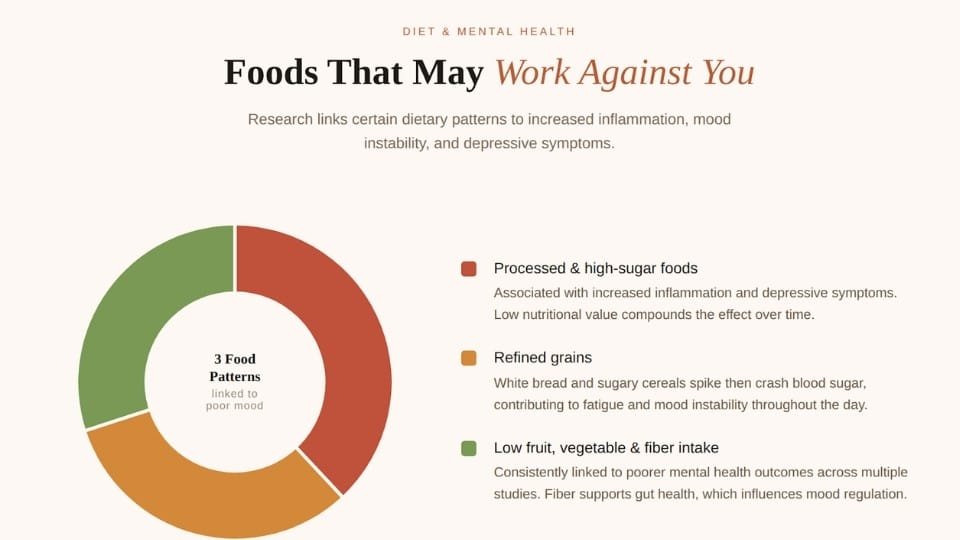
Just as some foods may support your mental health, others may not.
Making sense of the research on diet and mental health requires holding two things at once: the evidence is real, but it is not absolute.Â
Highly processed foods, refined grains, and diets low in fruits and vegetables are consistently linked to poorer mood outcomes, but diet is one thread in a much larger picture that includes sleep, stress, social connection, genetics, and access to care.
Small, sustainable shifts away from foods that spike and crash your blood sugar or fuel inflammation can be a meaningful part of supporting your mental wellbeing. This is not a replacement for professional treatment, but a quiet act of care you can take every day.
It is also important to recognize the difference between adjusting your diet for mental health and developing an unhealthy relationship with food. If changes in eating patterns feel obsessive or restrictive, understanding the early signs of an eating disorder can help you identify when dietary focus has crossed a line.
How to Actually Eat Well When You’re Depressed
Depression itself makes eating well harder. Diet is one piece of a larger set of practical strategies for dealing with depression that includes movement, sleep, social connection, and knowing when to seek professional help. Low mood, fatigue, reduced appetite, or increased appetite are common symptoms of major depressive disorder, and they can make nutrition feel like one more thing to struggle with.
A few practical approaches that tend to work:
- Start small: Adding one serving of vegetables or swapping refined grains for whole grains is more sustainable than a complete dietary overhaul
- Prepare when energy is higher: If mornings are better for you, prep simple meals or snacks in the morning rather than relying on decisions at low-energy moments
- Don’t aim for perfect: A well-balanced diet over time matters more than any single meal
- Keep easy options available: Nuts, seeds, yogurt, fruit, and canned fish are low-effort options that support nutritional goals without much preparation
- Talk to your doctor: If appetite changes, weight loss or weight gain are significant, mention it at your next appointment, as these can be symptoms worth addressing in your treatment plan
If you are in the middle of a depressive episode and even these small steps feel overwhelming, there are immediate strategies that can help you stabilize before you think about dietary changes.
Sleep and nutrition are deeply intertwined. Poor sleep drives cravings for high-sugar, processed foods, while nutritional deficiencies can worsen insomnia and depression in a cycle that is hard to break without addressing both.
The Gut-Brain Connection
One reason diet may influence mood is through the gut-brain axis, the communication network between your digestive system and your brain. Research has linked gut microbiome composition to mental health disorders, including major depression, and a dietary pattern that supports beneficial gut bacteria may have upstream effects on mood and stress response.
Foods that tend to support gut health include fermented foods (yogurt, kefir), high-fiber vegetables, legumes, and whole grains. Conversely, diets high in sugar and low in fiber can reduce microbial diversity in the gut, which some researchers associate with higher inflammation and depressive symptoms.
This doesn’t mean gut health is the singular answer to depression. Mental health is complex, and causes vary widely. But it does suggest that what you eat may influence your mental state through more than one pathway.
Nutrition as Part of Your Treatment, Not a Replacement
It’s important to note that diet changes is not a treatment for clinical depression. Major depressive disorder is a serious condition that often requires therapy, medication, or a combination of approaches guided by a mental health professional. Understanding the different forms of treatment for depression can help you see where nutrition fits alongside therapy, medication, and residential care.
The research supports nutrition as a complement to treatment, something that may help you feel better and support recovery, not as a substitute for professional care.
A holistic approach to depression integrates nutrition with therapy, movement, mindfulness, and experiential care into a single coordinated plan, which is how dietary changes produce the most meaningful results.
Common Dietary Patterns and Their Association with Depression
| Dietary Pattern | Key Features | Association with Depression | Research Strength |
| Mediterranean diet | Fish, olive oil, whole grains, and vegetables | Lower rates of major depressive disorder | Moderate; multiple observational studies and one RCT |
| Western/processed food diet | High sugar, refined grains, low fiber | Associated with higher depressive symptoms | Observational; hard to isolate diet from lifestyle |
| Well-balanced diet | Varied protein, healthy fats, micronutrients | Generally supports mood and energy | Consistent across clinical nutrition literature |
| High-sugar diet | Frequent refined carbohydrates, low nutrients | Associated with inflammation and mood instability | Growing evidence: the mechanism involves the gut and blood sugar |
If you’re currently in treatment and wondering how to bring diet into the conversation, it can be as simple as asking your provider whether any dietary changes might support what you’re already doing.
Depression and Diet Frequently Asked Questions
What is the Mediterranean diet, and why does it come up in mental health research?
The Mediterranean diet emphasizes olive oil, fatty fish, whole grains, legumes, leafy greens, fruits, and vegetables, with limited processed foods. Researchers studying depression and diet frequently reference it because it provides nutrients associated with brain health and reduced inflammation, and several studies have found associations between this pattern and lower depression risk.
Can changing my diet help with depression?
Some research suggests that dietary patterns, particularly those resembling the Mediterranean diet, are associated with lower rates of depressive symptoms. Changing your diet alone is unlikely to resolve major depression, but eating in ways that support brain health and stable energy may complement your existing treatment. If you are unsure whether what you are experiencing is clinical depression, a depression checklist can help you assess your symptoms before making decisions about treatment.
Should I take supplements for depression?
Some people with depression have nutritional deficiencies, including low levels of vitamin D, folate, or omega-3 fatty acids, that may be worth addressing. However, supplementation decisions should be made with your health care professional based on your specific situation, not as a general recommendation for everyone with depression.
Nourishing Yourself Is Part of the Work
Recovery from depression involves many moving parts: therapy, medication, sleep, connection, and yes, what you eat. While no meal plan will cure depression, approaching nutrition with a little more intention may be one way to support your mind and body through treatment.
At Kinder in the Keys, we work with women navigating real mental health challenges, and we know that the basics matter. At Kinder in the Keys, nutrition is built into our residential treatment model, not as an afterthought, but as a daily clinical tool. Our chef-prepared organic meals are designed around the same research discussed in this article. If you are a woman living with depression and looking for treatment that addresses the whole person, call 800-545-4046 or verify your insurance benefits.