
What are the Early Signs of Eating Disorders in Women?
Recognizing the early signs of eating disorders in women is crucial for early intervention and successful treatment. If you notice these signs in yourself or someone else, approach the situation with empathy and seek a women’s eating disorder therapy program near you.| Category | Signs and Symptoms |
|---|---|
| Physical |
|
| Behavioral |
|
| Emotional/Psychological |
|
| Social/Environmental |
|
Physical Signs
Physical signs can be subtle at first but often become more apparent as the disorder progresses. Women may experience noticeable weight loss or fluctuations, even if they insist they are eating normally. Frequent dizziness or fainting spells can occur due to inadequate nutrition. Gastrointestinal issues like constipation or acid reflux are common, stemming from irregular eating patterns or purging behaviors. Hair loss and brittle nails are also telltale signs, as the body lacks essential nutrients. Additionally, changes in menstrual cycles, such as missed periods or irregularities, can indicate an underlying issue. Persistent fatigue and weakness are other red flags that the body is not receiving the nourishment it needs. These signs should prompt immediate attention and care.Behavioral Changes
Behavioral changes are often the most visible indicators of an eating disorder. Women with eating disorders may develop obsessive behaviors around food and dieting, such as counting calories excessively or avoiding certain food groups. They might engage in ritualistic eating habits, like cutting food into tiny pieces or eating in a particular order. Hiding food or binge eating in secret are common behaviors, reflecting the shame and guilt associated with disordered eating. Excessive exercise routines, sometimes to the point of exhaustion, are another significant sign. Withdrawal from social activities, especially those involving food, can also signal an eating disorder.Emotional and Psychological Symptoms
Emotional and psychological symptoms of eating disorders are critical to recognize. A preoccupation with body weight and shape often dominates a woman’s thoughts, leading to severe mood swings and irritability. Depression and anxiety frequently accompany eating disorders, exacerbating feelings of worthlessness and despair, especially when co-occurring mental health conditions are present. Women may struggle with low self-esteem, believing that their value is tied to their appearance or weight. Extreme perfectionism and a fear of failure are also common, driving unhealthy behaviors to achieve an unrealistic body image. These emotional struggles are deeply intertwined with the disorder and require compassionate understanding and support.Social and Environmental Factors
Social and environmental factors provide additional context for identifying eating disorders. Women may avoid eating in public or in front of others, fearing judgment or scrutiny. This avoidance can extend to significant changes in relationships and social interactions, leading to increased isolation and secrecy. Declines in work or academic performance are often noticeable, as the disorder consumes their focus and energy. Environmental factors, such as a home environment that emphasizes appearance or diet culture, can also contribute to the development and maintenance of eating disorders. Recognizing these social and environmental cues can help in understanding the broader impact of the disorder.Definition and Types of Eating Disorders in Women
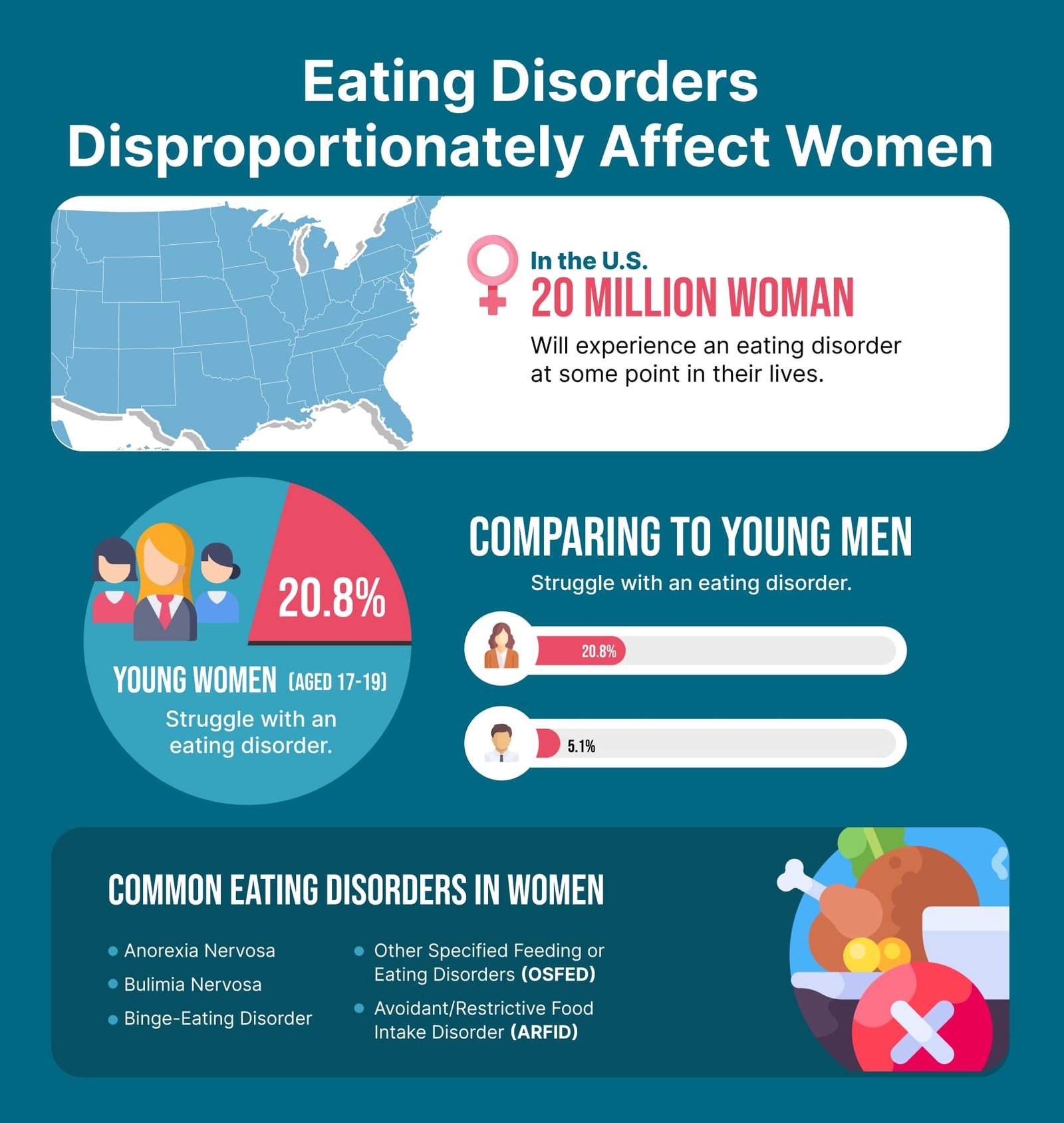 Eating disorders are serious mental health conditions that manifest through abnormal eating habits and a preoccupation with body weight or shape.
These common eating disorders in women lead to severe physical and emotional health issues if not addressed early.
Eating disorders are serious mental health conditions that manifest through abnormal eating habits and a preoccupation with body weight or shape.
These common eating disorders in women lead to severe physical and emotional health issues if not addressed early.
Anorexia Nervosa
Anorexia nervosa is characterized by an intense fear of gaining weight and a distorted body image, even when the individual is underweight. Women with anorexia often restrict their eating severely, sometimes to dangerous levels. They may engage in excessive exercise, compulsively working out to burn off perceived excess calories. Frequently weighing themselves and measuring their body are also common behaviors.Bulimia Nervosa
Bulimia nervosa involves episodes of binge eating followed by compensatory behaviors to prevent weight gain. This includes consuming unusually large amounts of food in a short time, often secretly. To counteract the binge eating, individuals may induce vomiting, abuse laxatives, or engage in excessive exercise. Those with bulimia nervosa often have extreme body dissatisfaction and a deep concern with their body shape and weight.Binge Eating Disorder
Binge eating disorder is marked by recurrent episodes of eating large quantities of food, often rapidly and to the point of discomfort. Unlike bulimia, these episodes are not followed by purging. Individuals with this disorder may eat in secret, feeling ashamed of the amount of food consumed, and experience a loss of control during binge episodes. Feelings of guilt and distress about binge eating are also common.Other Specified Feeding and Eating Disorders (OSFED)
OSFED includes eating disorders that don’t meet the exact criteria for anorexia, bulimia, or binge eating disorder but are still serious. Examples include atypical anorexia nervosa, where all symptoms of anorexia are present, but the individual’s weight is within or above the normal range. Purging disorder involves recurrent purging behaviors without binge eating, and night eating syndrome is characterized by consuming large amounts of food at night, often after waking from sleep.How to Approach a Loved One Suspected of Having an Eating Disorder
 Recognizing and addressing an eating disorder in a loved one can be challenging but is crucial for their health and recovery.
Here’s a guide to help you approach this delicate situation effectively and with compassion.
Recognizing and addressing an eating disorder in a loved one can be challenging but is crucial for their health and recovery.
Here’s a guide to help you approach this delicate situation effectively and with compassion.