
Depression is one of the most common mental disorders in the world, but it does not affect everyone the same way. Women experience depression at nearly twice the rate of men, and the signs of depression in women often look different from what most people expect. If you are a woman trying to make sense of what you are feeling, understanding how symptoms of depression show up differently by gender is the first step toward getting the right help.
At a women’s depression treatment center like Kinder in the Keys, we see these gender-specific patterns every day. Recognizing these differences is not about putting anyone in a box. It is about making sure women receive mental health treatment that fits their experience.
Signs of Depression in Women

The signs of depression in women extend beyond persistent sadness. Many women describe depression as a heavy numbness, a disconnection from themselves, or a constant feeling of running on empty while still appearing fine on the surface.
Women are more likely than men to experience symptoms of depression that include guilt, worthlessness, and self-blame. Where a man might express frustration outward, a woman is more likely to turn it inward, questioning whether she is doing enough or handling life the way she should.
What are the Most Common Signs?
Common signs include persistent sadness or low mood lasting weeks, loss of interest in activities that once brought joy, difficulty concentrating, changes in appetite leading to weight gain or weight loss, sleep disturbances, withdrawal from relationships, low self-esteem, and suicidal thoughts in severe cases.
Many women experience high-functioning depression, maintaining work and family obligations while quietly suffering. A depression checklist can help you assess whether what you are experiencing may be clinical depression.
Depression Symptoms Unique to a Woman’s Life
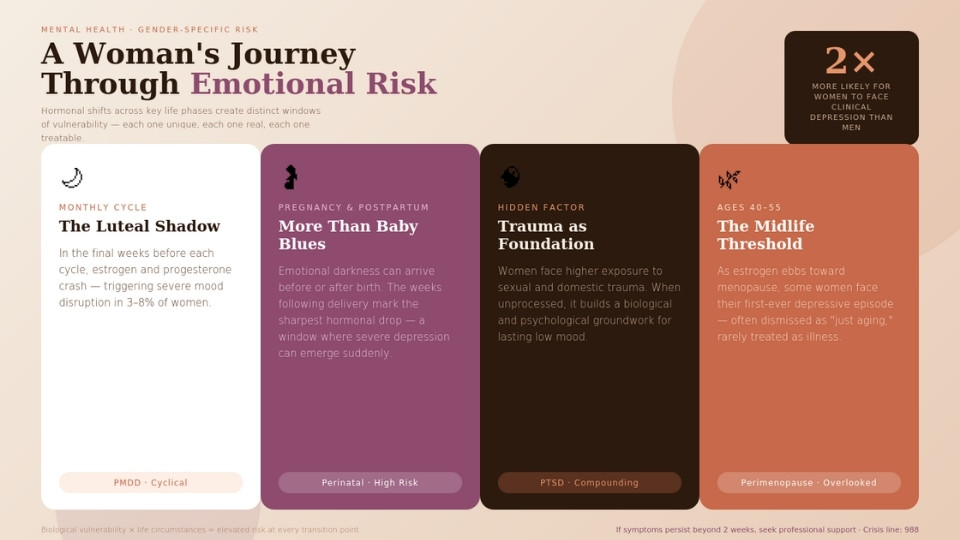
Several forms of this condition are tied to biological events that only women experience. Hormonal shifts during the menstrual cycle, pregnancy, the postpartum period, and menopause create vulnerability windows where symptoms of depression can develop or intensify.
Premenstrual Dysphoric Disorder
Premenstrual dysphoric disorder goes beyond typical premenstrual syndrome. It involves severe depression symptoms, mood swings, irritability, and difficulty concentrating that begin in the luteal phase and resolve after menstruation. For women with this condition, symptoms are disabling, not just uncomfortable. It is classified in the Diagnostic and Statistical Manual of Mental Disorders and affects an estimated 3 to 8 percent of women.
Perinatal Depression
Perinatal depression includes prenatal depression during pregnancy and postnatal depression after giving birth. It goes well beyond the “baby blues.” Symptoms of depression during this stage can include overwhelming sadness, anxiety, difficulty bonding with the baby, and fatigue.
Many women feel shame about experiencing this during what society says should be the happiest time of their lives. Depression during pregnancy affects both mother and baby, making early intervention essential. The weeks following delivery are a particularly high-risk window for developing a major depressive episode, when depressive symptoms can appear suddenly or build gradually.
Perimenopausal Depression
Perimenopausal depression occurs during the transition to menopause, typically between ages 40 and 55, when estrogen levels fluctuate and decline. Women who have never struggled with mental health before can develop depression for the first time during this stage.
This form is frequently dismissed as a normal part of aging. It is not. It is a treatable mental health condition that deserves clinical attention.
Physical Symptoms of Depression in Women

Depression is not only a mood disorder. The physical symptoms are often the first signs that something is wrong.
Women frequently report chronic pain, including headaches, back pain, and physical aches that have no clear medical explanation. Digestive problems, chronic fatigue, heart disease risk with long-term untreated depression, and thyroid disorders that can worsen symptoms of depression are all common.
A physical exam and lab tests can help a primary care doctor rule out physical illness as a contributing factor. Other symptoms like weight changes and sleep disruption should also be assessed alongside emotional indicators for a complete clinical picture.
How Depression Is Diagnosed
Depression diagnosed properly requires a thorough evaluation. A mental health professional will assess symptoms against criteria in the Diagnostic and Statistical Manual, considering duration, severity, and impact on functioning.
| Step in Diagnosis | What Is Evaluated | Key Criteria or Details | Why It Matters |
|---|---|---|---|
| Clinical Evaluation | Symptoms, history, and overall mental health | A mental health professional conducts a thorough assessment using DSM criteria, including duration, severity, and impact on daily functioning | Ensures an accurate diagnosis rather than relying on surface-level symptoms |
| Symptom Threshold | Number and duration of symptoms | Major depressive disorder requires at least 5 symptoms within the same 2-week period, representing a change from previous functioning | Helps distinguish clinical depression from temporary mood changes |
| Differentiating Types | Severity and persistence of symptoms | Milder forms like dysthymic disorder (persistent depressive disorder) involve long-term low mood lasting 2 years or more | Guides appropriate treatment planning based on type and severity |
| Context and Co-Occurring Conditions | Other mental health conditions and life factors | Evaluation includes anxiety, PTSD, eating disorders, substance abuse, family history, and stressful or traumatic life events | Prevents misdiagnosis and ensures treatment addresses the full picture of a person’s mental health |
For a diagnosis of what is sometimes called major depressive disorder, a woman must experience at least five symptoms during the same two-week period, representing a change from previous functioning. Only a few symptoms may be present in milder forms, such as dysthymic disorder, which involves a persistent low mood lasting two years or more. Even in these milder forms, the impact on quality of life, relationships, and daily functioning can be substantial.
Because depression in women often co-occurs with anxiety, PTSD, eating disorders, or substance abuse, a comprehensive assessment is critical. The same depression symptoms can point to different conditions depending on context.
Family history plays a significant role. Women with relatives who have experienced this condition or other mental illnesses are at higher risk. Traumatic life events and stressful life events further increase vulnerability to developing depression.
Major Depressive Disorder in Women
Sometimes called major depression, this condition is a serious mental health condition involving persistent depressive symptoms that interfere with daily functioning. In its most severe form, it can be debilitating. It is distinct from temporary sadness or grief and is classified as a mental illness in every major diagnostic framework.
Women are more likely than men to experience a major depressive episode. The condition can present as a single episode or as recurrent depression with periods of remission between episodes. Some women develop treatment-resistant depression, where standard approaches have not produced adequate relief. Others experience escalating distress over time when the condition goes untreated, progressing from manageable to debilitating.
Co-occurring mental health disorders are common. Many women also experience panic disorder, seasonal affective disorder, or other conditions that require integrated care. When mental illness presents alongside depression, treatment becomes more complex but also more important. A thorough treatment plan addresses every condition together rather than in isolation. Understanding the differences between major depressive disorder and persistent depressive disorder helps women recognize their specific patterns.
Signs of Depression in Men: Key Differences
Men experience depression too, but they tend to express it differently. While women are more likely to internalize through sadness and self-blame, men more commonly externalize it through irritability, anger, aggression, and risk-taking.
Men are more likely to turn to substance abuse as a coping mechanism. They may increase alcohol or drug use, become workaholics, or engage in reckless behavior. These patterns mask the underlying condition, making it harder to diagnose.
Men are also less likely to seek help from a mental health professional, contributing to higher suicide rates despite lower rates of diagnosed depression. The key distinction is not that one gender suffers more. It is that men and women often experience the same symptoms through different behavioral expressions, which means effective treatment must account for how each person actually presents, not how textbooks say they should.
Mental Health Factors That Affect Women Differently
Several psychological factors and social conditions contribute to higher rates of depression in women. These factors do not operate in isolation. They compound over time in ways that increase both the likelihood and severity of depressive episodes.
Women are more likely to experience certain types of trauma, including sexual assault and domestic violence. The connection between trauma and depression is one of the most consistent findings in clinical research. When trauma goes unaddressed, it creates a foundation for chronic depressive symptoms that can escalate into severe symptoms requiring residential care.
Caregiving burden falls disproportionately on women. Managing households, raising children, and caring for aging parents while maintaining careers creates chronic stress that erodes mental health over months and years. When combined with biological vulnerability, these pressures help explain why females experience depression at higher rates.
Body image pressure and cultural expectations add another layer. Women are socialized to suppress anger and prioritize others’ needs, which fuels rumination and self-criticism, both of which intensify symptoms of depression. These patterns often persist for years before being recognized as mental illness rather than personality traits.

How Depression in Women Is Treated
Depression can be treated effectively with the right approach. The different forms of treatment range from outpatient care to residential programs, and the right choice depends on severity.
Talk therapy, particularly cognitive behavioral therapy and interpersonal therapy, is the frontline approach to treating depression at the mild to moderate level. Antidepressant medicines are commonly prescribed for moderate to severe cases and work best when combined with therapy as part of a comprehensive treatment plan.
A holistic approach to depression that addresses nutrition, movement, sleep, and experiential therapies alongside clinical care often produces deeper results for women. When depression treated through outpatient methods has not improved, residential care should be considered.
Other Treatments and Brain Stimulation Therapies
When standard approaches are not sufficient, other treatments exist. Brain stimulation therapies include electroconvulsive therapy for severe depression and other brain stimulation therapies such as transcranial magnetic stimulation. These brain stimulation therapies are typically reserved for treatment-resistant depression.
Residential mental health treatment provides daily structure, clinical intensity, and safety that outpatient care cannot match. For women whose depression has reached a severe form where daily functioning is compromised, immersive care offers the best path to treat depression at its root.
Frequently Asked Questions About Depression in Women
What are the most common signs of depression in women?
The most common signs of depression in women include persistent sadness, loss of interest, guilt and self-blame, difficulty concentrating, changes in appetite and sleep, fatigue, low self esteem, mood swings, and withdrawal. Physical symptoms such as chronic pain and digestive issues are also common. Some women experience only a few symptoms at first, making early recognition difficult.
Is depression more common in women than men?
Yes. Women are approximately twice as likely as men to develop depression. This difference is driven by hormonal factors, higher trauma exposure, caregiving demands, and the tendency toward emotional internalization.
What is perinatal depression?
Perinatal depression encompasses prenatal depression and postnatal depression. It is a serious mental health condition affecting both mother and child. Symptoms of depression during this period can include severe sadness, anxiety, fatigue, and difficulty bonding. It requires professional treatment after giving birth or during pregnancy.
Can depression in women be treated without medication?
Milder forms may respond to therapy and lifestyle changes without medication. However, moderate to severe depression often benefits from antidepressant medicines as part of a broader treatment plan. The decision should be made with a mental health professional who understands your clinical picture.
When should a woman seek professional help for depression?
If symptoms of depression have lasted more than two weeks, are affecting daily functioning, or include suicidal thoughts, seek help immediately. Contact the Department of Health and Human Services at 988 for immediate crisis support.
Take the Next Step
If the signs of depression in women described here feel familiar, you deserve care built around how depression actually shows up in your life.
Kinder in the Keys is a residential depression treatment program for women in Key Largo, Florida. We treat severe depression, perinatal depression, perimenopausal depression, treatment-resistant depression, and co-occurring conditions in a private, women-only environment.
Call 800-545-4046 or verify your insurance benefits to understand your options.